₨ 0.00

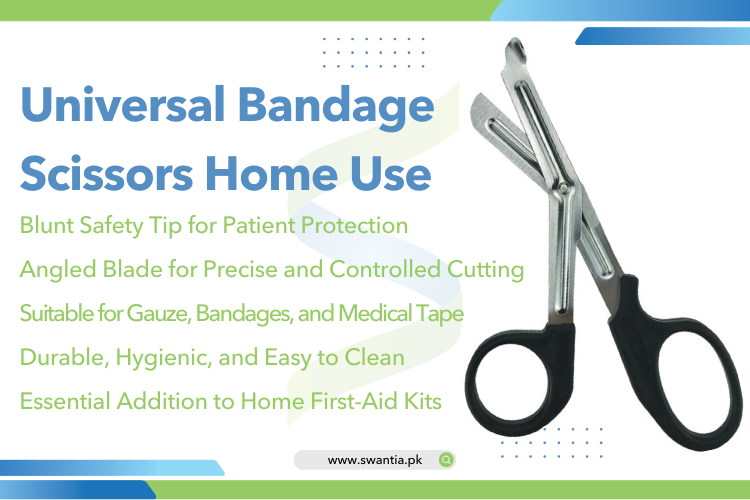
Universal Bandage Scissors for Home Use: Safe and Practical Wound Care Support
When managing minor injuries at home, having the right first-aid tools can make a meaningful difference. One simple yet highly practical instrument is the universal bandage scissors. Designed specifically for safe cutting of dressings and medical materials, these scissors are commonly found in hospitals, clinics, and well-equipped home first-aid kits.
However, it is important to emphasize that any wound care or dressing management should be done under appropriate medical guidance. Home tools are intended to assist with basic care and should never replace professional medical advice.
What Are Universal Bandage Scissors?
Universal bandage scissors are specialized medical scissors designed to safely cut bandages, gauze, tape, and clothing around injuries without harming the skin. They are typically recognized by their angled shape and a blunt lower blade tip that slides easily under dressings.
These features make them a safer alternative to regular household scissors when dealing with medical materials.
Key Design Features
1. Blunt Safety Tip
The rounded lower blade helps protect the patient’s skin while cutting through bandages or clothing.
2. Angled Blade Design
The angled shape allows users to cut dressings comfortably while keeping hands away from the wound area.
3. Durable Stainless Steel Construction
Most medical-grade bandage scissors are made from corrosion-resistant stainless steel for strength, hygiene, and long-term use.
4. Multipurpose Utility
They can cut:
- Gauze and medical dressings
- Adhesive tapes
- Elastic bandages
- Clothing in emergency situations
Why Keep Bandage Scissors at Home?
While commonly used by healthcare professionals, universal bandage scissors can also be a useful addition to a home first-aid kit, especially for families, caregivers, and individuals managing minor injuries or chronic wound care under medical supervision.
Potential benefits include:
- Safer removal of bandages compared to household scissors
- Reduced risk of accidentally cutting skin
- Faster access during first-aid situations
- Better hygiene for medical supplies
Safety and Responsible Use
Although bandage scissors are simple tools, they should always be used responsibly.
Important safety considerations include:
- Only use them for basic first-aid tasks such as cutting dressings or tape.
- Do not attempt medical procedures or wound treatment without professional instruction.
- For deep wounds, severe bleeding, infections, or burns, seek immediate medical care.
- Keep the scissors clean and stored in a dedicated first-aid kit.
If you or a family member requires regular dressing changes, it is always best to follow instructions provided by a qualified healthcare professional.
Choosing Quality Bandage Scissors
When selecting bandage scissors for home use, consider the following:
- Medical-grade stainless steel construction
- Smooth cutting performance
- Rounded safety tip design
- Comfortable grip handles
- Easy cleaning and maintenance
High-quality instruments are designed to provide consistent performance and durability, making them reliable for long-term first-aid preparedness.
Final Thoughts
Universal bandage scissors are a simple yet essential first-aid tool that can support safer dressing management at home. When used appropriately and under medical guidance, they help families handle minor first-aid needs more efficiently.
Remember, home first-aid tools are meant to support—not replace—professional healthcare. If there is ever uncertainty about an injury or wound, consulting a qualified medical professional is always the safest course of action.